First time in the milonga
Is it your first day at a milonga, or are you learning to dance tango and planning to attend one soon?
Here are some tips to help you feel comfortable. Tango has a rich and strong culture because it was born as a popular dance. As such, there are certain codes that are important to understand, especially if you’re just beginning your journey into the wonderful world of Argentine tango.
Traditional milongas, no matter where in the world you are, tend to follow certain codes that are repeated and preserved. However, many of these codes are influenced by the local culture of the region or city where the milonga takes place.
Here in New York, for example, most of the traditional codes are respected, like the famous “cabeceo.” What is the cabeceo? Essentially, it’s the way leaders invite followers to dance at a milonga. Unlike other social dances, where the man approaches the woman and invites her to dance at her table, in tango, the invitation is made through eye contact. Neither person changes their position—they simply hold their gaze for a moment, and the magic of connection happens as they mutually invite each other to dance.
I know it’s a bit hard to explain in writing, so maybe I’ll make a video to show how it works. Let me know in the comments if you’d like me to do that! 😉 In the meantime, remember: if you’re a follower, pay attention to the glances around the milonga—you might be missing an invitation to dance without even realizing it!
Another tip I always share: if it’s your first time at a milonga, let the organizer know. I’m sure they’ll help you feel welcome. For example, in my milonga, I always take the time to explain to beginner students how the milonga works and make sure new attendees feel at home.
That said, don’t stress too much about it. There are always milongueros who are happy to invite you to dance directly at your table if they notice you’re new to the scene.
Argentine tango is a social dance, and for us milongueros, the milonga is a space to dance, unwind, and socialize. Take the opportunity to make new friends and chat with other attendees. Many times, lovely invitations to dance come after a good conversation.
At a milonga, we usually dance in tandas (sets of songs) of 4 tangos. After that, a cortina (a different genre of music) plays, signaling that everyone should return to their seats. When the cortina ends, a new tanda begins, and that’s when dancers start looking for their next partner using the cabeceo.
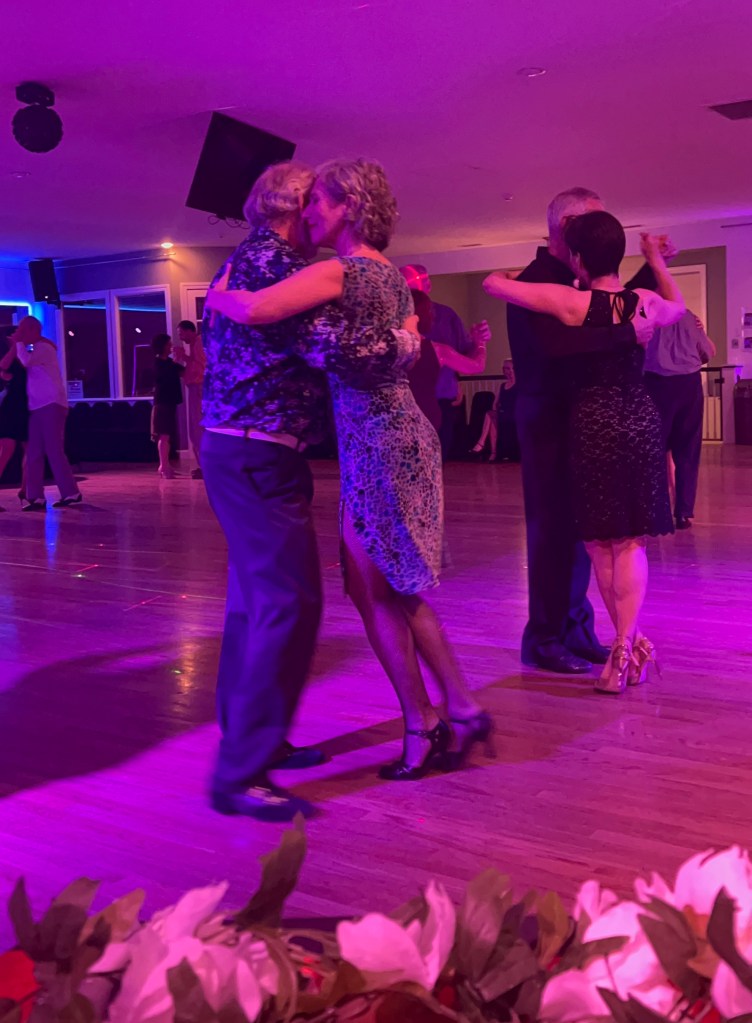
Before stepping onto the dance floor, make sure to observe the ronda (dance flow). Dancers always move counterclockwise. When you enter the floor, ensure you’re moving in that direction and avoid crossing through the middle to prevent disrupting other couples.
What should you wear?
You’re probably wondering about this. The most important thing is to feel comfortable yet elegant. Men typically wear dress pants and semi-formal shirts, while women often choose dresses with beautiful back designs or slits in the legs. If it’s your first time, I recommend checking out some photos or videos I’ve shared in my Facebook group. I might also write a future post with recommendations for tango clothing brands so you can get an idea of how people usually dress.
Your choice of shoes is crucial. Ideally, wear specialized dance shoes, but if you don’t have them yet, look for shoes that slide easily and, if possible, are flexible.
Finally, be patient. Mastering tango is not an easy or quick task… but once you connect with it, you’ll enjoy it immensely. I promise!
